Defined role
Can you state whether the formula is designed for appetite support, energy support, metabolism-related positioning, or another narrow purpose?

The independent comparison standard
People searching for the best weight loss supplements need a usable standard. “Best” should describe a product that fits a defined need, discloses useful information, and can be used responsibly—not a universal winner selected by a fake score.
Affiliate disclosure: LeanSelect Journal may receive compensation when visitors purchase through certain links. Editorial criteria do not change based on compensation, and every product still requires an individual label and safety review.
Editor's answer
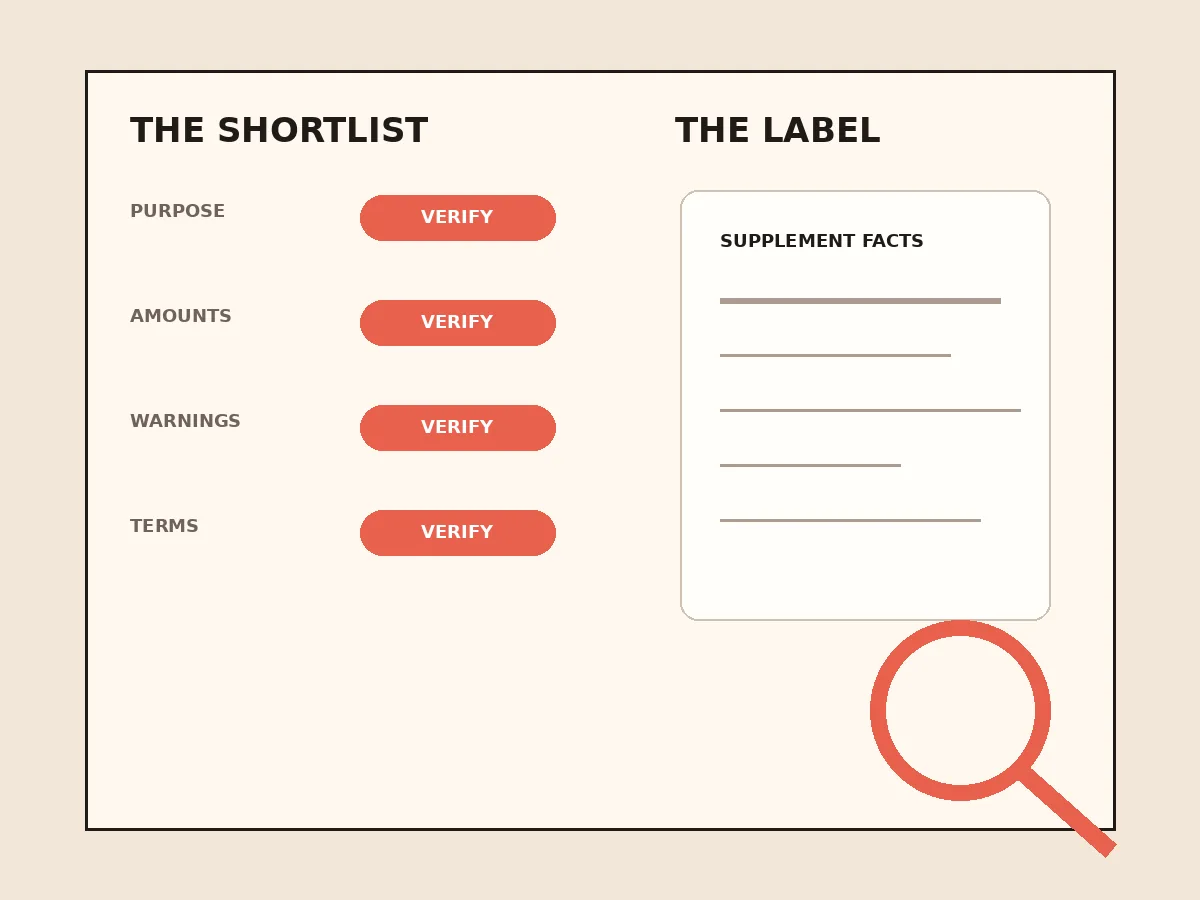
The best weight loss supplement is not a universal winner; it is a transparent formula that fits a specific goal, tolerance, health context, and routine. The label should disclose amounts, directions, warnings, and intended support, while the seller should disclose the purchase terms.
Five-part comparison
A comparison should reward clarity and fit—not advertising volume, ingredient count, or affiliate payout.
Can you state whether the formula is designed for appetite support, energy support, metabolism-related positioning, or another narrow purpose?
Are active ingredients and amounts visible per serving, or does a proprietary blend prevent an ingredient-by-ingredient comparison?
Do timing, food, water, serving frequency, and duration instructions make sense for a realistic daily routine?
Are stimulant sources, age limits, interaction cautions, and health-condition warnings easy to find before checkout?
Can you identify the merchant, total charge, shipping rules, return window, cancellation process, and recurring-order terms?
Comparison worksheet
Use one row per product. “Not disclosed” is a useful finding; it should never be silently converted into a positive score.
Best by fit—not by fantasy
Compare the mechanism the label is positioning, the serving timing, water or meal instructions, fiber amount when relevant, stimulant content, and warnings. A product should not imply that ordinary hunger is a medical condition.
Compare total caffeine from every ingredient and daily serving, not only a highlighted source. Consider sleep schedule, coffee or energy-drink intake, exercise timing, and sensitivity. More stimulation is not automatically better.
Separate a formula's ingredients from broad thermogenic or metabolism language. Ask what is measurable on the label, whether the amounts are disclosed, and whether the page jumps from a modest support claim to an unsupported outcome.
Current option
The linked page is a commercial destination, not a preassigned winner. LeanSelect Journal does not publish invented prices, ratings, clinical claims, customer testimonials, certifications, availability, or shipping promises for it.
Open the product page and fill in the worksheet using only what you can verify. If a required fact is missing, record it as missing. Do not let a polished design replace the label, warnings, merchant identity, or terms.
Review integrity
An honest comparison also explains uncertainty: missing data, changing labels, and individual differences should reduce confidence rather than being converted into a promotional conclusion.
Official consumer resources
NIH ODS: Weight-Loss Supplements FDA: Dietary Supplements 101 FDA: Tainted Weight-Loss ProductsReader desk
Clear answers for comparison-stage buyers.
The best weight loss supplements are not universal winners. The strongest candidates for an individual are transparent about ingredients and amounts, have a clearly defined purpose, fit the person’s health context and stimulant tolerance, provide usable warnings and directions, and are sold under understandable terms.
Compare products by intended support first. An appetite-support formula and an energy-focused formula should not be judged as though they do the same job. Then compare label transparency, amounts, directions, warnings, stimulant profile, seller policy, and practical fit.
No. A longer ingredient list can create more complexity without improving clarity. A focused formula with disclosed amounts is usually easier to evaluate for purpose, overlap, tolerance, and interactions than a long blend built around ingredient count.
A responsible review should not guarantee a winner for every reader. Individual health context, goals, medications, diet, stimulant tolerance, and ability to follow directions can change whether a formula is worth considering.
A score is useful only when every criterion and weighting is transparent and based on verifiable information. This guide avoids invented numerical ratings. Use the comparison worksheet to record facts rather than converting missing information into a confident score.
Verifiable testing can add information about identity or quality, depending on the program, but it does not prove that a product causes weight loss. Confirm what was tested, who performed it, and whether the claim can be verified.
Red flags include guaranteed pounds lost, invented doctor endorsements, fake before-and-after stories, undisclosed affiliate relationships, unsupported “clinically proven” language, hidden ingredient amounts, fake urgency, and reviews that never discuss warnings or seller terms.
Compare before you commit
Open the current page, document what is disclosed, and decide whether the formula fits your actual criteria.